TDR engages a wide range of stakeholders, including scientists, funders and governments, to shape the global research agenda on infectious diseases of poverty. This section highlights TDR’s efforts in identifying and prioritizing key research areas, ensuring open and equitable access to scientific data and literature, and fostering an inclusive and equitable research environment. Furthermore, TDR supports efforts to harmonize investments in building research capacity and plays an influential role in the global debate around key health issues via the Global Health Matters podcast. These initiatives collectively drive impactful and inclusive research efforts.
Objective
To support the generation of evidence that strengthens epidemic preparedness and the resilience of health systems.

Key activities
Clockwise from top left: Ricardo Baptista Leite, Ayoade Alakija, Wilfried Mutombo, Yasmine Belkaid, John Reeder, Francine Ntoumi and Corine Karema.
All photos courtesy of guests except for John Reeder Credit: TDR/Antoine Tardy
Calls for inclusivity in health research have been intensifying in recent years. The moves reflect awareness of the importance of creating more equitable and collaborative international partnerships and ensuring that diverse voices, especially from LMICs, are heard and included in all stages of the research process.
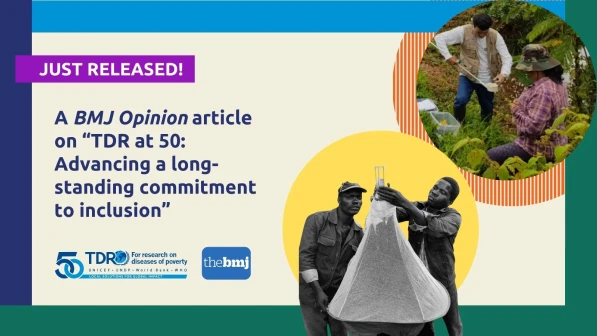
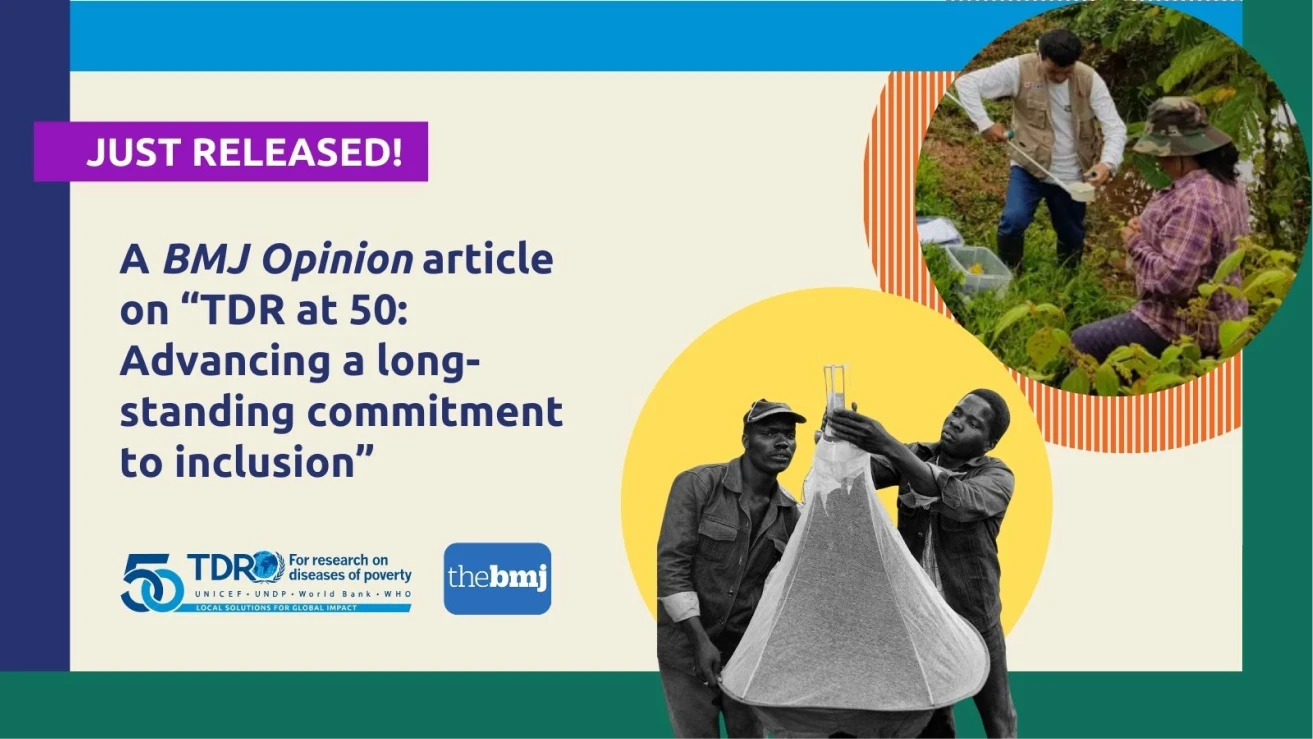
Top photo: Scientists searching for mosquito larvae in the Peruvian Amazon.
Credit: Freddy Alava
Bottom photo: African researchers trapping tsetse flies responsible for transmission of sleeping sickness.
Credit: WHO/T. Land
Calls for inclusivity in health research have been intensifying in recent years. The moves reflect awareness of the importance of creating more equitable and collaborative international partnerships and ensuring that diverse voices, especially from LMICs, are heard and included in all stages of the research process.
TDR, which marked its 50th anniversary in May 2024, has sought to contribute to inclusivity through commitments to equitable research partnerships, democratizing health research, and to gender equity. All of these commitments are closely aligned with wider efforts to decolonize global health.
Top photo: Scientists searching for mosquito larvae in the Peruvian Amazon.
Credit: Freddy Alava
Bottom photo: African researchers trapping tsetse flies responsible for transmission of sleeping sickness.
Credit: WHO/T. Land
Throughout its history, TDR has had two intertwined missions—to build research capacity in the countries where infectious diseases burden so many, particularly the less advantaged, and to help prioritize and fund the research needed to tackle these diseases. As a global programme of scientific collaboration co-sponsored by UNICEF, UNDP, the World Bank, and WHO, TDR has always aimed to forge partnerships and collaborations with leading research institutions in LMICs. TDR’s longstanding partnership with the Armauer Hansen Research Institute (AHRI) in Ethiopia, for example, has helped catalyse individual, institutional and national research capacity in the country.
Read the full story here.