Addressing global health challenges

3. Epidemics and outbreaks

Implementation research is crucial to strategies for prevention, preparedness and response in the face of public health outbreaks and emergencies. The succession of global public health emergencies the world has experienced in recent years is likely to continue, and epidemic threats remain inevitable, with potential for added reversal of public health gains, as witnessed with Ebola, Zika and COVID-19.

New and improved tools, approaches and interventions are required to detect and counteract emerging infectious disease threats and population vulnerabilities early. We support the generation of evidence that strengthens epidemic preparedness and the resilience of health systems to minimize the impact on existing programmes such as established vaccination measures. We also support research that informs equitable and inclusive health system responses to epidemics and outbreaks, which reach the most vulnerable populations and leave no one behind, strengthening health… This will strengthen health security for all.

Objective
To support the generation of evidence that strengthens epidemic preparedness and the resilience of health systems.

Disease focus
Climate-sensitive diseases such as dengue, Zika, Chikungunya, yellow fever, meningitis and cholera.

Key activities

  • Collaboration with the Eliminate Yellow fever Epidemics (EYE) Strategy Secretariat to address outbreak prevention and response gaps in high-risk African countries.
  • Supporting researchers, health professionals and other stakeholders to expand their capacity to conduct and manage implementation research to prepare for and address epidemics and outbreaks.
2024 updates

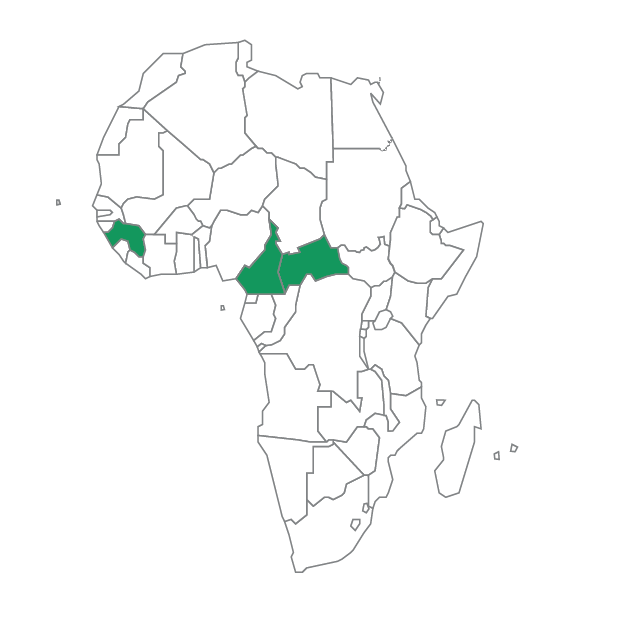
  • A research package for conducting root cause analysis of yellow fever outbreaks in countries with prior mass vaccination campaigns was developed and piloted in Cameroon, Central African Republic and Guinea, and is expected to be available in early 2025 for countries facing yellow fever re-emergence. A situation analysis and needs assessment on community engagement in vector control activities to tackle urban yellow fever outbreaks was conducted in Doula, Cameroon.
A map of Africa with Cameroon, Central African Republic and Guinea shaded in green
  • A TDR survey found that 54 out of 124 alumni of the Structured Operational Research and Training Initiative (SORT IT) from 28 African countries actively participated in Mpox preparedness and response efforts. (See Spotlight story below.)
A cover of the book Principles and Practice of Emergency Research Response, with an orange-to-blue gradient background

Relevant training activities 

  • TDR’s postgraduate training scheme, in collaboration with eight universities in LMICs, focuses on building capacity on implementation research on major global health challenges, including epidemics and outbreaks.
  • TDR-supported regional training centres (RTCs) trained more than 7000 individuals online and 345 in-person on implementation research to address epidemics and outbreaks.

RTCs trained
more than

7000

individuals online

345

individuals in-person

  • New IR MOOC module launched on planning, distribution, communication, and monitoring for successful nationwide vaccine campaigns, using the COVID-19 vaccine roll-out in Ghana as a real-world example.
  • TDR has contributed to a yellow fever outbreak handbook for vector control activities in urban settings.

Spotlight

Mpox response: Building resilience through public health research capacity

Frontline public health workers who have participated in TDR’s training programmes have been able to apply what they’ve learned to mpox preparedness and response efforts in several African countries.

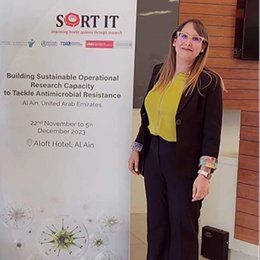
Woman standing next to a SORT IT banner at a health research event
Dr Maroua Trigui, Assistant Professor in Preventive and Community Medicine, Habib Bourguiba University Hospital in Sfax, Tunisia
The SORT IT training gave me a completely different vision of everything. It helped me to design studies better, analyse the data and present the findings effectively.

Spotlight

Mpox response: Building resilience through public health research capacity

Frontline public health workers who have participated in TDR’s training programmes have been able to apply what they’ve learned to mpox preparedness and response efforts in several African countries.

At the bustling Habib Bourguiba University Hospital in Sfax, Tunisia, Dr Maroua Trigui recalls a pivotal moment three weeks ago. “I sent an email to the hospital director saying we need to organize a meeting with our hygiene team to discuss mpox preparedness,” she says. “Many of my colleagues, who had little knowledge about mpox, were eager to understand how it’s transmitted and to discuss prevention strategies.”

Following several subsequent meetings and training sessions, she conducted a study to assess her colleagues’ knowledge about mpox and the availability of personal protective equipment. She has also designed and implemented a new surveillance system for tracking infections that uses a QR code, replacing a paper-based system, and conducted meetings to help colleagues use it.

Dr Trigui’s proactive approach is a testament to the impact of the Structured Operational Research and Training Initiative (SORT IT). This programme, led by TDR, has been instrumental in equipping healthcare professionals across Africa with the skills needed to tackle public health emergencies like mpox.

Dr Trigui, Assistant Professor in Preventive and Community Medicine in her hospital’s hygiene department and Infection Prevention and Control team, joined a SORT IT course held in the United Arab Emirates in November 2023. 

Woman standing next to a SORT IT banner at a health research event

Dr Maroua Trigui during her SORT IT training course in November 2023.
Photo courtesy of Dr Maroua

Dr Maroua Trigui, Assistant Professor in Preventive and Community Medicine, Habib Bourguiba University Hospital in Sfax, Tunisia
The SORT IT training gave me a completely different vision of everything. It helped me to design studies better, analyse the data and present the findings effectively.

Her experience is echoed by many SORT IT alumni who have been at the forefront of outbreak preparedness and response efforts. According to a recent survey, 54 out of 124 alumni surveyed, from 28 countries, have been actively involved in mpox preparedness and response. Among these, 93% are applying the skills they acquired through SORT IT in their current roles.

Summary of SORT IT survey results
ParticularsNumber (%)
SORT IT alumni surveyed124 from 28 countries
Involved in mpox preparedness/response54 (44%)
Using SORT IT acquired skills in preparedness/response50 (93%)
– in preparedness28
– in both preparedness/response22
Dr Trigui, said...
It was really the best training experience I’ve ever had − I now have a very clear vision about the type of information I need and how to use it.

“It was really the best training experience I’ve ever had” Dr Trigui said. “I now have a very clear vision about the type of information I need and how to use it.”