We support work that crosses the disciplines of human, animal and environmental health and promote the importance of applying an intersectional gender lens to infectious disease research.
Objective
To support research on strategies to control and sustain elimination of diseases of poverty.

Disease focus
Neglected tropical diseases, malaria, tuberculosis.

Key activities
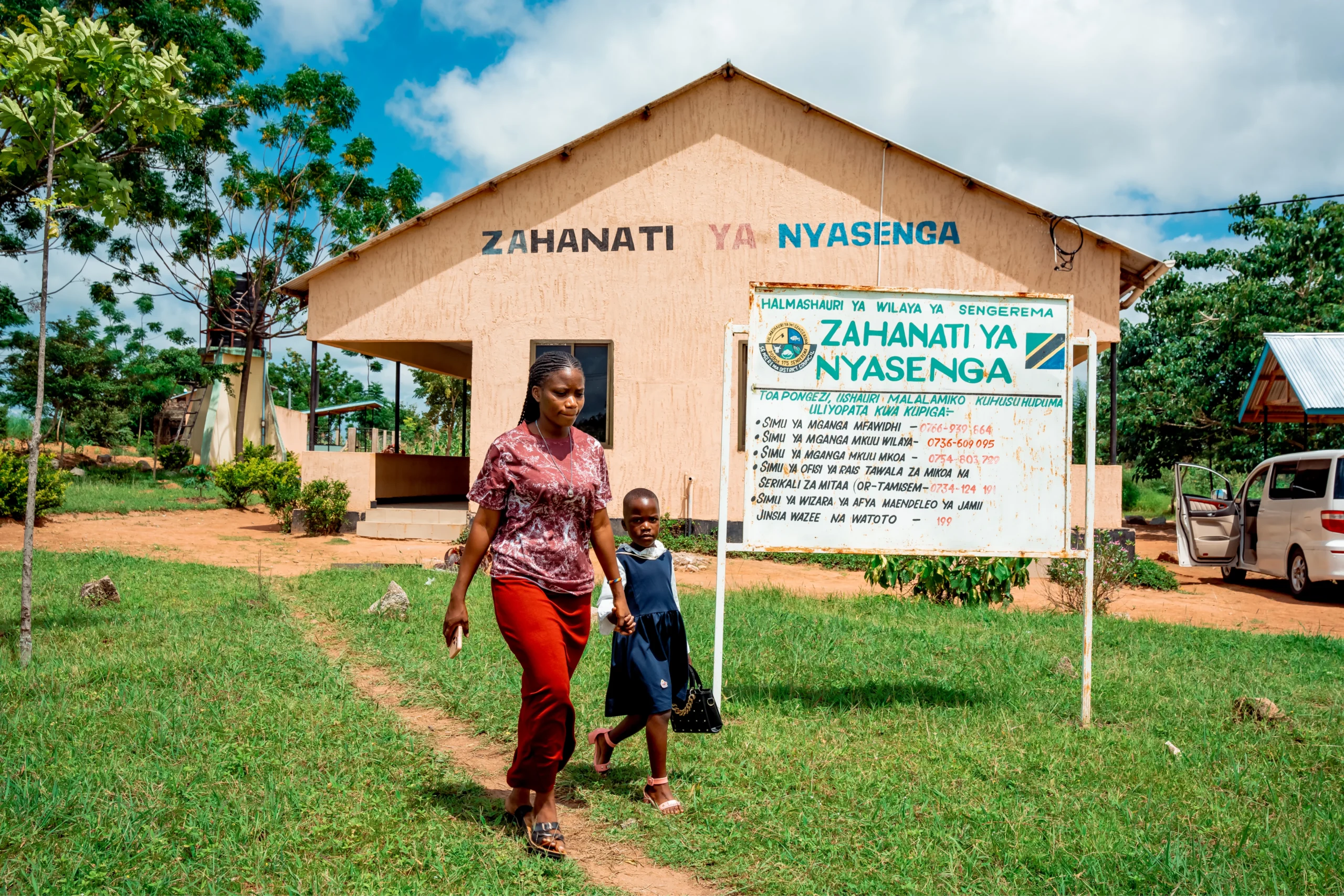
Expanding treatment to children with schistosomiasis in the United Republic of Tanzania
A mother at the local health centre in Sengerema delivers her child’s urine and stool sample to be tested for schistosomiasis.
Credit: UNDP/Kumi Media
Exploring integration of services for female genital schistosomiasis (FGS) with HIV care
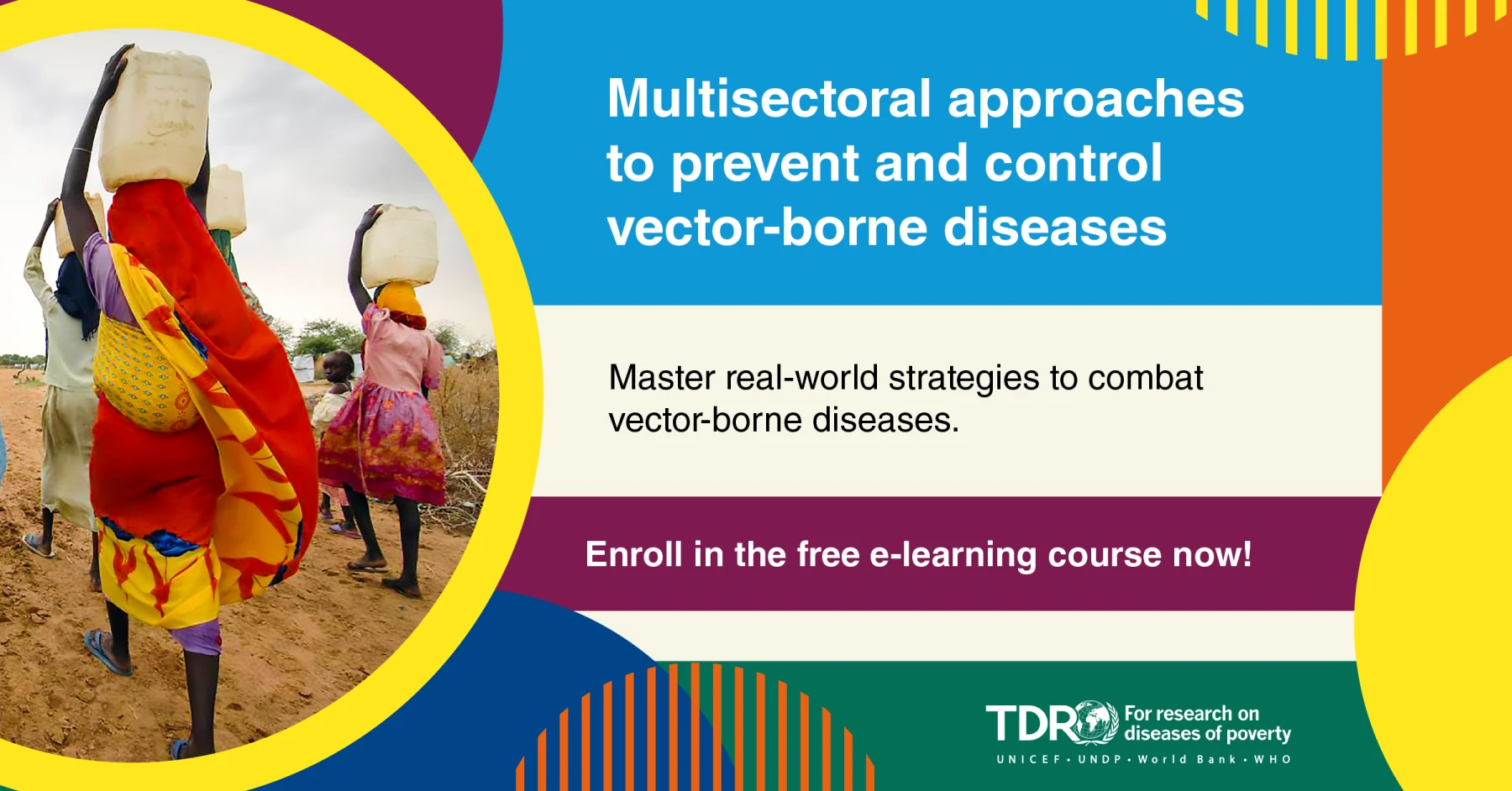
Nine countries have documented the impact of the multisectoral approach for the prevention and control of vector-borne diseases
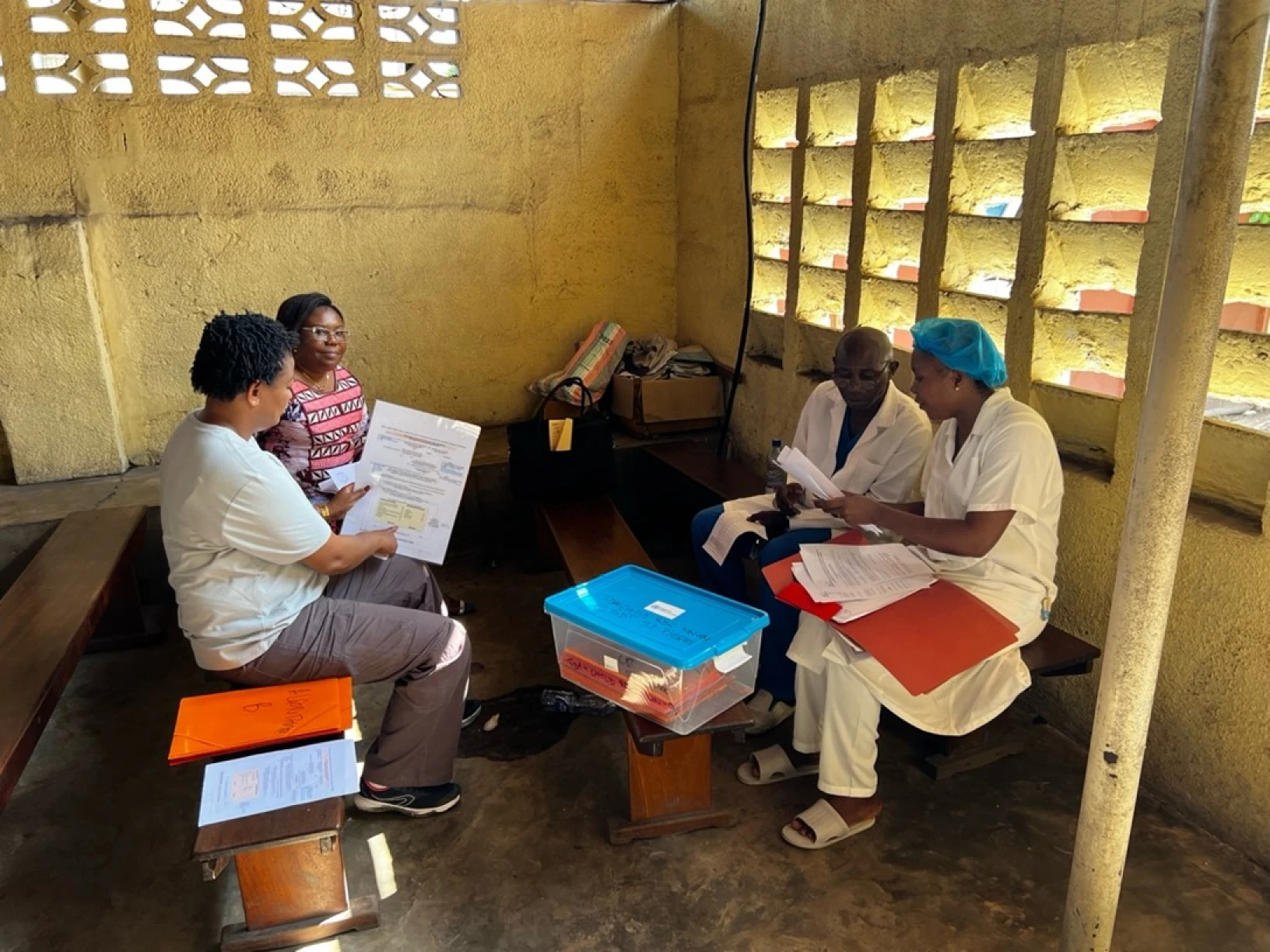
Supporting access to TB diagnostics and treatment
Reviewing the TDA4Child study material in Saint Pierre research site in Kinshasa.
Credit: TDR/E. Papot
Ghana approves moxidectin for the treatment of river blindness
Moxidectin was developed through two decades of collaboration between TDR, researchers in disease endemic and other countries, WHO country offices and the not-for-profit biopharmaceutical company Medicines Development for Global Health (MDGH). In December 2024, the Ghana Food and Drugs Authority approved MDGH’s marketing authorization application for moxidectin for the treatment of river blindness in adults and children aged 4 years and older. This paves the way for a TDR-supported pilot implementation programme. (See Spotlight story below.)
Generating evidence on infectious diseases of poverty, gender and intersectionality in LMICs
Testing the sterile insect technique (SIT) to control dengue transmission in the Pacific Region
Supporting the introduction of malaria vaccines in 14 countries in West and Central Africa
Ten Impact Grants for Regional Priorities have been awarded following a call for applications jointly issued by TDR and the WHO Regional Office for South-East Asia to support implementation research and innovations for accelerating elimination of infectious diseases of poverty under the Regional Flagship Priorities in South-East Asia.
RTCs trained
more than
individuals online
individuals in-person
TDR’s long involvement in the development of drugs for neglected diseases took another positive step forward as Medicines Development for Global Health (MDGH) announced on 5 December 2024 that the Ghana Food and Drugs Authority (FDA) approved its marketing authorization application for moxidectin for the treatment of river blindness (onchocerciasis) in adults and children aged 4 years and older. This paves the way for a TDR-supported pilot implementation programme.
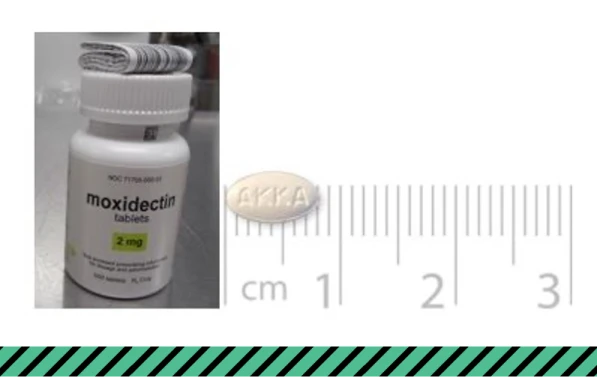
Moxidectin bottle and pill.
Courtesy of Medicines Development for Global Health
When Dr Vanessa Cruvinel started her career in public health, she could never have dreamt that she’d be working in Latin America’s largest open waste site, trying to improve the health of one of the most vulnerable populations in Brazil.
Our catalytic role
In 2020, TDR published a conceptual framework covering the essential elements of successful multisectoral collaborations to address vector-borne diseases. TDR has been supporting research teams in Africa and Latin America that have been implementing the multisectoral approach.
TDR
World Health Organization
20 Avenue Appia
1211 Geneva 27
Switzerland
tdr@who.int
Visit our website: tdr.who.int
ISBN 978-92-4-010930-8 (electronic version)
ISBN 978-92-4-010931-5 (print version)
Some rights reserved. This work is available under the Creative Commons Attribution-NonCommercial-ShareAlike 3.0 IGO licence (CC BY-NC-SA 3.0 IGO; https://creativecommons.org/licenses/by-nc-sa/3.0/igo).
Under the terms of this licence, you may copy, redistribute and adapt the work for non-commercial purposes, provided the work is appropriately cited, as indicated below. In any use of this work, there should be no suggestion that the World Health Organization (WHO), including the UNICEF/UNDP/World Bank/WHO Special Programme for Research and Training in Tropical Diseases (TDR), endorses any specific organization, products or services. The use of WHO and TDR logos is not permitted. If you adapt the work, then you must license your work under the same or equivalent Creative Commons licence. If you create a translation of this work, you should add the following disclaimer along with the suggested citation: “This translation was not created by the World Health Organization (WHO) or by the UNICEF/UNDP/World Bank/WHO Special Programme for Research and Training in Tropical Diseases (TDR). WHO, including TDR is not responsible for the content or accuracy of this translation. The original English edition shall be the binding and authentic edition”.
Any mediation relating to disputes arising under the licence shall be conducted in accordance with the mediation rules of the World Intellectual Property Organization.
Suggested citation. TDR annual report 2024: building local research solutions to improve global health. Geneva: World Health Organization; 2025. Licence: CC BY-NC-SA 3.0 IGO.
Cataloguing-in-Publication (CIP) data. CIP data are available at https://iris.who.int/.
Sales, rights and licensing. To purchase WHO publications, see https://www.who.int/publications/book-orders. To submit requests for commercial use and queries on rights and licensing, see http://www.who.int/copyright.
Third-party materials. If you wish to reuse material from this work that is attributed to a third party, such as tables, figures or images, it is your responsibility to determine whether permission is needed for that reuse and to obtain permission from the copyright holder. The risk of claims resulting from infringement of any third-party- owned component in the work rests solely with the user.
General disclaimers. The designations employed and the presentation of the material in this publication do not imply the expression of any opinion whatsoever on the part of WHO, including TDR, concerning the legal status of any country, territory, city or area or of its authorities, or concerning the delimitation of its frontiers or boundaries. Dotted and dashed lines on maps represent approximate border lines for which there may not yet be full agreement.
The mention of specific companies or of certain manufacturers’ products does not imply that they are endorsed or recommended by WHO, including TDR, in preference to others of a similar nature that are not mentioned. Errors and omissions excepted, the names of proprietary products are distinguished by initial capital letters.
All reasonable precautions have been taken by WHO, including TDR, to verify the information contained in this publication. However, the published material is being distributed without warranty of any kind, either expressed or implied. The responsibility for the interpretation and use of the material lies with the reader. In no event shall WHO, including TDR, be liable for damages arising from its use.
Cover page photo. ©
Cover caption: Angel Michael (centre) delivers her child’s urine and stool sample to Ngw’ashi Dotto Haga (left), a community health care worker, as part of the baseline parasitological assessment study.
Credit: UNDP/Kumi Media
TDR’s long involvement in the development of drugs for neglected diseases took another positive step forward as Medicines Development for Global Health (MDGH) announced on 5 December 2024 that the Ghana Food and Drugs Authority (FDA) approved its marketing authorization application for moxidectin for the treatment of river blindness (onchocerciasis) in adults and children aged 4 years and older. This paves the way for a TDR-supported pilot implementation programme.
TDR, as part of the Access and Delivery Partnership (ADP), is collaborating with the Ghana Health Service, the University of Health and Allied Sciences in Ghana, the Bruyère Research Institute in Canada, MDGH and disease endemic communities to evaluate the acceptability and feasibility of moxidectin distribution through community-based mass drug administration (MDA).
The results of this implementation research programme will add to the body of efficacy and safety data that formed the basis of the Ghana FDA approval and will inform WHO and endemic country decisions on the role of moxidectin in onchocerciasis elimination strategies.
Read the full story here.
Moxidectin bottle and pill
Courtesy of Medicines Development for Global Health
When Dr Vanessa Cruvinel started her career in public health, she could never have dreamt that she’d be working in Latin America’s largest open waste site, trying to improve the health of one of the most vulnerable populations in Brazil.
Until recently, Estrutural City in Brasilia had the largest open waste site in Latin America. While the site was closed in 2018 and many waste pickers are now employed in indoor waste sorting facilities, extreme poverty of people living in this area still contributes to the transmission of diseases, particularly dengue. As of April 2024, Brazil is the country with the highest number of dengue cases in the world, with 6.3 million suspected cases, more than 80% of cases globally reported to WHO.
Dr Marcos Obara and Dr Cruvinel have been leading the research team in Brazil. With technical and financial support from TDR, the team conducted research to develop public health solutions to reduce the incidence of dengue infection in Estrutural City, the poorest region in Brasilia, through the participation of three sectors having an impact on health: sanitation, urban services and education.
In Estrutural City, the lack of adequate sanitation contributes to the growth of dengue-carrying mosquitoes. Although the study’s qualitative survey showed that many inhabitants knew how to prevent the spread of dengue by using special water storage tanks and removing trash from breeding sites, because of extreme poverty they could not afford to change their behaviour. Over 70% of inhabitants have had dengue at some point in their lives.
Some key preliminary findings of the research being used by the authorities to address specific challenges include the following:
While the study is still ongoing, there has been a 64% reduction in dengue cases in Estrutural City between 2022 and 2023. This outcome is clearly linked to the multisectoral collaboration between water and sanitation sector, education sector and vector control efforts, including the dissemination of the larvicide pyriproxyfen, according to Dr Cruvinel.
Dr Cruvinel and her team are now sharing their experiences with other countries, including in West Africa.