New and improved tools, approaches and interventions are required to detect and counteract emerging infectious disease threats and population vulnerabilities early. We support the generation of evidence that strengthens epidemic preparedness and the resilience of health systems to minimize the impact on existing programmes such as established vaccination measures. We also support research that informs equitable and inclusive health system responses to epidemics and outbreaks, which reach the most vulnerable populations and leave no one behind, strengthening health… This will strengthen health security for all.
Objective
To support the generation of evidence that strengthens epidemic preparedness and the resilience of health systems.

Disease focus
Climate-sensitive diseases such as dengue, Zika, Chikungunya, yellow fever, meningitis and cholera.

Key activities
RTCs trained
more than
individuals online
individuals in-person
Frontline public health workers who have participated in TDR’s training programmes have been able to apply what they’ve learned to mpox preparedness and response efforts in several African countries.
At the bustling Habib Bourguiba University Hospital in Sfax, Tunisia, Dr Maroua Trigui recalls a pivotal moment three weeks ago. “I sent an email to the hospital director saying we need to organize a meeting with our hygiene team to discuss mpox preparedness,” she says. “Many of my colleagues, who had little knowledge about mpox, were eager to understand how it’s transmitted and to discuss prevention strategies.”
Following several subsequent meetings and training sessions, she conducted a study to assess her colleagues’ knowledge about mpox and the availability of personal protective equipment. She has also designed and implemented a new surveillance system for tracking infections that uses a QR code, replacing a paper-based system, and conducted meetings to help colleagues use it.
Dr Trigui’s proactive approach is a testament to the impact of the Structured Operational Research and Training Initiative (SORT IT). This programme, led by TDR, has been instrumental in equipping healthcare professionals across Africa with the skills needed to tackle public health emergencies like mpox.
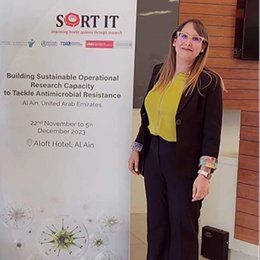
Dr Trigui, Assistant Professor in Preventive and Community Medicine in her hospital’s hygiene department and Infection Prevention and Control team, joined a SORT IT course held in the United Arab Emirates in November 2023.
Dr Maroua Trigui during her SORT IT training course in November 2023.
Photo courtesy of Dr Maroua
Her experience is echoed by many SORT IT alumni who have been at the forefront of outbreak preparedness and response efforts. According to a recent survey, 54 out of 124 alumni surveyed, from 28 countries, have been actively involved in mpox preparedness and response. Among these, 93% are applying the skills they acquired through SORT IT in their current roles.
| Particulars | Number (%) |
|---|---|
| SORT IT alumni surveyed | 124 from 28 countries |
| Involved in mpox preparedness/response | 54 (44%) |
| Using SORT IT acquired skills in preparedness/response | 50 (93%) |
| – in preparedness | 28 |
| – in both preparedness/response | 22 |
“It was really the best training experience I’ve ever had” Dr Trigui said. “I now have a very clear vision about the type of information I need and how to use it.”