Addressing global health challenges

4. Resistance to treatment and control agents

There is a dynamic interaction between interventions to control and eradicate diseases caused by microbes (such as bacteria, viruses, fungi and parasites) and the vectors that often transmit them (such as mosquitoes, flies and snails). Over time, resistance to interventions can develop and reduce their effectiveness.

Antimicrobial resistance, resistance to antiparasitic diseases and insecticide resistance now all pose significant global threats. TDR supports multisectoral research to inform national action plans and strategies to prevent and combat resistance. We contribute to research that strengthens resilience through improved surveillance, better risk assessment, enhanced awareness and better understanding of underpinning human behaviour related to the spread of resistance.

Objective
To support multisectoral research that inform national action plans and strategies to prevent and combat resistance.

Disease focus
Antimicrobial resistance, drug-resistant tuberculosis.

Key activities

  • Building sustainable operational research capacity to generate and utilize evidence to tackle the emergence, spread and health impact of antimicrobial resistance (AMR) in LMICs.
  • Supporting research to assess the effectiveness, safety, feasibility, acceptability, cost and impact of the use of novel regimens for patients with extensively drug-resistant tuberculosis.
  • Supporting researchers, health professionals and other stakeholders to expand their capacity to conduct and manage implementation research to mitigate resistance to treatment and control agents.
2024 updates

  • Seventy-nine percent (79%) of the 75 research studies conducted through the AMR-SORT IT project in Africa, Asia and Latin America led to tangible changes in policy and practice.
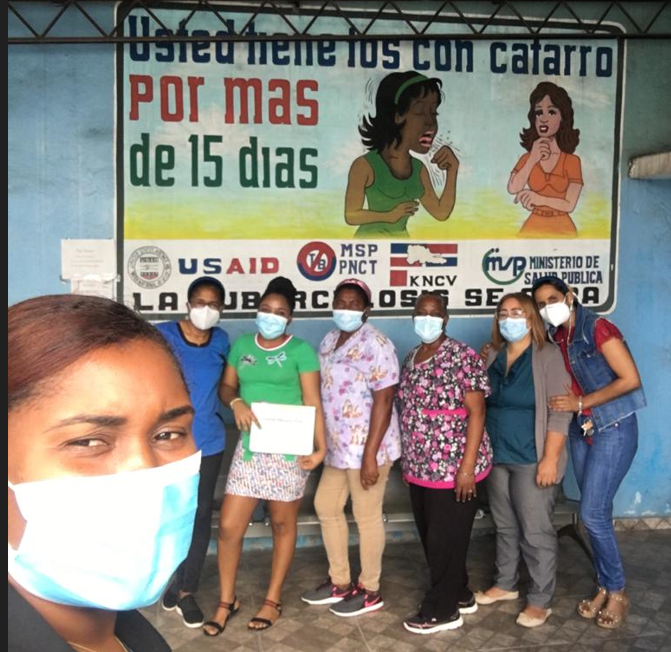
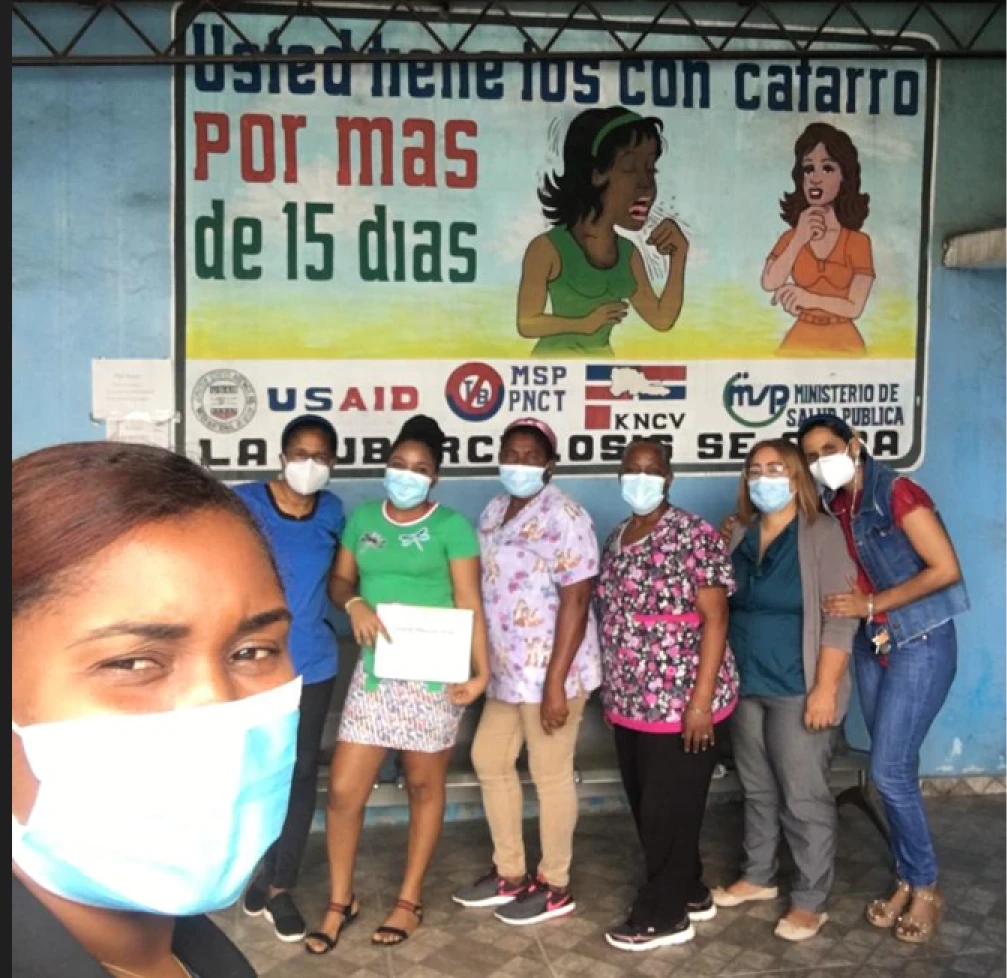
A group of women wearing face masks pose in front of a mural with Spanish text about persistent cough symptoms and tuberculosis awareness

A 20-year-old patient diagnosed with Rifampicin-resistant TB receiving certification of “cured” after 9 months of all-oral treatment accompanied by health personnel from the specialized TB center, Santo Domingo, Dominican Republic.

Credit: Aline De Cima

  • The Impact Grants initiative is supporting a study on “Bacteriophage-based control of transmission and emergence of carbapenem-resistant pathotypes of Escherichia coli and Klebsiella pneumoniae in Uganda.”
  • A research team in the Philippines has investigated gender dimensions and other social inequities associated with AMR. A research team from South Africa conducted a literature review exploring the intersection of gender and other sociocultural determinants of health and AMR in a changing climate.
  • To address the challenge of mosquito resistance to insecticides, TDR has supported several networks and LMIC-based young scientists to attend scientific meetings organized by the West African Aedes Surveillance Network, the International Conference on Advances in Surveillance and Control Methods for Aedes-Borne Diseases and Urban Vectors, and the International Conference for Tropical Medicine and Malaria. All events were opportunities to discuss, exchange and develop collaborations to fight insecticide resistance.
The logo of the West African Aedes Surveillance Network (WAASuN)

Relevant training activities 

  • TDR’s postgraduate training scheme, in collaboration with eight universities in LMICs, focuses on building capacity on implementation research on major global health challenges, including resistance to treatment and control agents.

  • TDR-supported regional training centres (RTCs) trained individuals on implementation research to mitigate resistance to treatment and control agents.
RTCs trained
more than

7000

individuals online

345

individuals in-person

Spotlight

Supporting policy-makers tackling drug-resistant TB

TDR-supported studies on short, all-oral regimens for drug-resistant tuberculosis have shown high treatment success rates and prompted national policy changes in the Dominican Republic and Ecuador, who have integrated the novel regimens into routine care for drug-resistant TB patients.

Spotlight

Supporting policy-makers tackling drug-resistant TB

TDR-supported studies on short, all-oral regimens for drug-resistant tuberculosis have shown high treatment success rates and prompted national policy changes in the Dominican Republic and Ecuador, who have integrated the novel regimens into routine care for drug-resistant TB patients.

In collaboration with the WHO Global Tuberculosis Programme and technical partners, TDR has developed the ShORRT operational research package (Short, all-Oral Regimens for Rifampicin-resistant Tuberculosis) to support the implementation of such drug regimens.

Since 2019, the ShORRT initiative has involved and supported 27 countries worldwide, working alongside WHO regional and country offices, academia, technical partners such as KNCV Tuberculosis Foundation, the Union and Damien Foundation, and funding agencies such as the United States Agency for International Development (USAID) and The Global Fund to Fight AIDS, Tuberculosis, and Malaria.

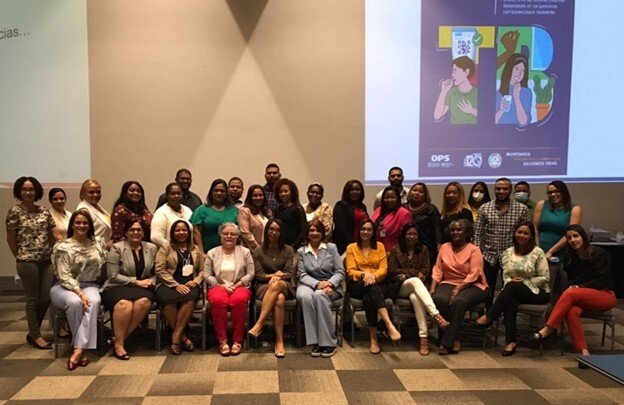
Dominican Republic team for ShORRT.

Credit: Maria Rodriguez

In the Region of the Americas, TDR, in collaboration with the Pan American Health Organization (PAHO), has been supporting the national TB control programmes (NTPs) of Colombia, Dominican Republic, Ecuador, Mexico and Nicaragua, which have used ShORRT to conduct operational research studies on the effectiveness and safety of the novel all-oral regimens for drug-resistant TB patients. In addition, studies in Colombia and the Dominican Republic assessed the impact of these drug regimens on the health-related quality of life of patients.

In the Dominican Republic, 113 patients with TB drug resistance were enrolled in seven drug-resistant TB clinics. Results of the study were published in BMC Infectious Diseases and showed that 79% of patients were successfully treated without relapse six months post-treatment. Due to the high success rate and satisfactory safety profile, the national TB control programme adopted this shorter treatment regimen lasting 9 to 12 months instead of 18 months for the standard regimen. Since September 2023, this short all-oral regimen is recommended for all patients with multidrug- and rifampicin-resistant TB in the Dominican Republic.

A group of women wearing face masks pose in front of a mural with Spanish text about persistent cough symptoms and tuberculosis awareness

A 20-year-old patient diagnosed with RR-TB receiving certification of “cured” after 9 months of all oral treatment accompanied by health personnel from the specialized TB center, Santo Domingo, Dominican Republic.

Credit: Aline De Cima

In Ecuador, the study was conducted in 61 health units across three cantons in Ecuador’s Zone 8: Guayaquil, Durán, and Samborondón. Between February 2020 and December 2022, 164 patients with multidrug-resistant or rifampicin-resistant TB were enrolled. The all-oral shorter regimen demonstrated an effectiveness of 74% compared with 42% for the standard regimen, with improved adherence and reduced loss to follow-up during the treatment. The insights gained from this study, combined with experiences from other countries in the region and WHO recommendations, have led Ecuadorian national authorities to adopt the all-oral 9-month short regimen evaluated in this study, along with the BpaL (bedaquiline + pretomanid + linezolid) regimens, as part of their national health policy.

“These two studies represent notable examples of how operational research led by national disease programmes can inform and drive national policy decisions,” said Dr Corinne Merle, who manages the ShoRRT initiative at TDR.

For more information, please contact Dr Corinne Merle.